
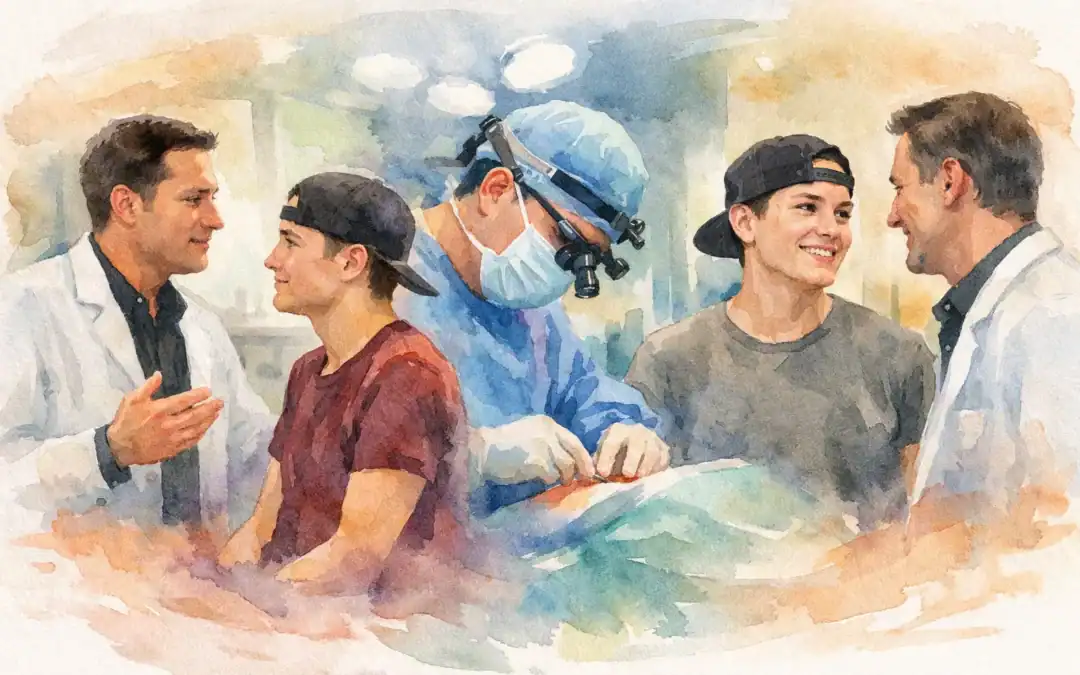
When people search for ftm top surgery before and after, they are usually looking for more than photos. They want to know what actually changes, what recovery really feels like, and whether the final result will look natural on their body. That is the right question to ask, because top surgery is not a one-day transformation. It is a surgical process with distinct stages, and understanding those stages leads to better decisions and better expectations.
The most useful way to think about before and after is not as a single comparison, but as a progression. Your chest before surgery includes skin quality, tissue volume, nipple position, muscle development, body weight distribution, and any stretching or irritation from binding. Your chest after surgery reflects the surgeon’s technique, the amount of tissue removed, incision placement, scar pattern, healing response, and how your body settles over time. The strongest outcomes come from careful planning before surgery and experienced execution in the operating room.
FTM Top Surgery Before and After: What Really Changes
The most obvious change is the contour of the chest. Before surgery, many patients are managing visible breast tissue, projection, lower nipple position, and the daily physical and emotional strain of binding. After surgery, the goal is a flatter, more masculine chest contour that fits the patient’s anatomy rather than a generic template.
That distinction matters. A high-level top surgery result is not just about removing tissue. It is about shaping the chest so it looks balanced in standing position, side profile, and movement. It also means accounting for skin excess, lateral fullness near the underarm area, and the final position and size of the nipples when nipple grafting is part of the procedure.
The after phase also includes less visible but equally meaningful changes. Many patients report relief from dysphoria, improved posture, easier exercise, better clothing fit, and freedom from binding. Those outcomes are real, but they should be understood alongside the medical reality that surgery creates scars, swelling, and a healing timeline that cannot be rushed.
What the “Before” Stage Should Include
A proper before stage is not just a consultation and a surgery date. It includes a detailed assessment of your chest, skin elasticity, nipple position, amount of tissue, and goals for appearance. The right procedure depends on anatomy first, not wishful thinking.
For patients with smaller chests and good skin elasticity, a more limited incision approach may sometimes be possible. For patients with more tissue, looser skin, or lower nipple position, double incision top surgery with free nipple grafts is often the more reliable option for achieving a consistent masculine contour. This is where surgical specialization matters. The best plan is the one that gives the strongest result on your body, not the one that sounds least invasive.
Preparation before surgery also includes stopping nicotine, reviewing medications, arranging recovery help, and understanding activity restrictions. Patients who approach surgery with a realistic timeline tend to have a smoother recovery because they are not expecting to look fully healed in a week or two.
The First After: Days and Weeks After Surgery
Immediately after surgery, your chest will not look like the final result. This is one of the most common sources of anxiety, especially for patients who have seen only polished long-term photos. In the early after phase, swelling is expected. Bruising may be present. The chest can look tight, uneven, high, or overly flat before the tissues relax.
Nipple grafts, if used, also go through a healing process that can look concerning at first. Color changes, scabbing, and a temporary irregular appearance are normal parts of healing. Incisions are fresh, and scar lines may look more prominent before they begin to soften.
This early period is about protection, not judgment. Compression, drain management when applicable, limited arm movement, and close adherence to postoperative instructions all play a role. Patients who understand this stage ahead of time are less likely to mistake normal healing for a bad result.
FTM Top Surgery Before and After by the 3-Month Mark
By around two to three months, the chest usually starts to look much more recognizable as an outcome rather than a fresh surgical site. Swelling often improves significantly, the contour becomes easier to evaluate, and the scars begin their longer maturation process. For many patients, this is the point where the emotional impact of surgery fully sets in.
Even then, three months is still early. Scar color may remain pink or dark depending on skin tone. Small asymmetries can still improve as swelling resolves. Nipple sensation may be absent, reduced, or altered, and sensation changes can continue for many months. Some areas of firmness or tightness are also common as the tissues remodel.
This is why before and after photos should always be viewed with the timeline in mind. A six-week photo, a three-month photo, and a one-year photo can look meaningfully different, even when the surgery itself was excellent.
The Long-Term After: What Final Results Depend On
Final results depend on both surgical skill and individual healing. An experienced specialist can control incision design, tissue removal, contouring, and nipple placement with precision. What no surgeon can fully control is how every body scars, how swelling resolves, or how skin retracts over time.
That is where nuance matters. Two patients with similar chests before surgery may still heal differently after surgery. One may develop very fine scars, while another may form wider or more noticeable scars despite following instructions carefully. Weight changes, muscle gain, skin quality, and genetics all influence the long-term look of the chest.
A strong long-term result should look masculine, proportionate, and intentional. The chest should not appear simply deflated. It should look sculpted. This is a major difference between basic tissue removal and advanced masculinizing chest surgery.
What to Look for in Before and After Photos
Before and after photos are helpful, but only when you know how to read them. Look for consistency in lighting, posture, and image angle. Look for results on body types similar to yours. A lean patient with tight skin is not the right comparison if you have more tissue, less skin elasticity, or a different build.
Pay attention to the side view as much as the front view. A good front photo can hide contour issues that become obvious in profile. Look at how the scars follow the chest, whether the lateral chest is addressed, and whether the nipples look appropriately sized and positioned for a masculine appearance.
It is also smart to look for a range of results, not just one ideal example. A surgeon with deep experience should be able to show consistent quality across many different anatomies. High procedure volume and focused specialization matter because they improve surgical judgment, not just technical repetition.
When Revision Becomes Part of the After Story
Not every before and after story ends with one operation. Some patients need revision because of residual tissue, poor scar placement, contour irregularities, stretched grafts, dog ears, or outcomes from surgery performed elsewhere. Revision surgery is more complex than primary surgery because scar tissue and altered anatomy create additional challenges.
That is why choosing a highly specialized surgeon from the start matters. Expertise is not just about the first operation. It is also about reducing the chance that you will need a second one. And for patients already dealing with an unsatisfactory result, revision should be approached with the same seriousness as the original decision.
The Emotional Side of Before and After
There is also an emotional truth that photos cannot show. Before surgery, many patients spend years adapting their lives around chest dysphoria. After surgery, the physical change can be immediate, but the adjustment is still a process. Relief, excitement, vulnerability, impatience, and even temporary emotional crashes during recovery can all happen.
That does not mean something is wrong. It means surgery is significant. A serious, life-changing procedure deserves realistic expectations, a clear plan, and a surgeon whose practice is built around this work rather than offering it as one procedure among many. That level of focus often makes the difference between a merely acceptable result and one that feels unquestionably right.
At a center devoted to masculinizing surgery, the before and after journey is treated as a continuum, not a marketing phrase. The chest you want after surgery is shaped by the choices made before surgery, the technique used during surgery, and the discipline of recovery afterward. If you are evaluating your options, look past the first impression and focus on experience, consistency, and whether the result looks truly built for your body. That is what turns a before and after image into a result you can live with confidently for years.